How do sustainability requirements affect global supply chains? Marcus Brandenburg presented research findings from Flensburg University of Applied Sciences in Sri Lanka and discussed the circular economy and opportunities for joint research.
Sustainability is an important field of business administration research at Flensburg University of Applied Sciences (Hochschule Flensburg, HS Flensburg). How can global supply chains be made more sustainable, and how can the principles of a circular economy be implemented in businesses? These questions guide the applied research and knowledge transfer activities of Prof. Dr. habil. Marcus Brandenburg, who works closely with students and researchers in Northern Germany. His research focuses on the effects of sustainability legislation on global supply chains and on the design and implementation of circular economy practices in small and medium-sized enterprises (SMEs).
A scientific study examined the direct effects of Germany’s Supply Chain Due Diligence Act (Lieferkettensorgfaltspflichtengesetz, LkSG) on companies subject to the legislation. Through interviews with company managers, Brandenburg and his research team investigated the conditions required for implementation, the effects on corporate performance, and the opportunities and risks associated with the law. A second empirical study went a step further by using a company survey to analyze the indirect effects of the legislation on upstream suppliers. The findings show that the LkSG can have both positive and negative implications for companies and supply chains. They also indicate that sustainability requirements are transmitted upstream through supply networks, from finished-goods manufacturers and retailers all the way to raw material markets.
As part of the Interreg project “GrønBusiness”, a research team at HS Flensburg led by Brandenburg developed a reference model for the circular economy. The model comprises 17 circular economy practices, 18 prerequisites for their implementation, and nine performance characteristics. In addition, the project team identified key drivers and barriers, as well as opportunities and risks that SMEs in the German-Danish border region should consider when implementing circular economy practices.
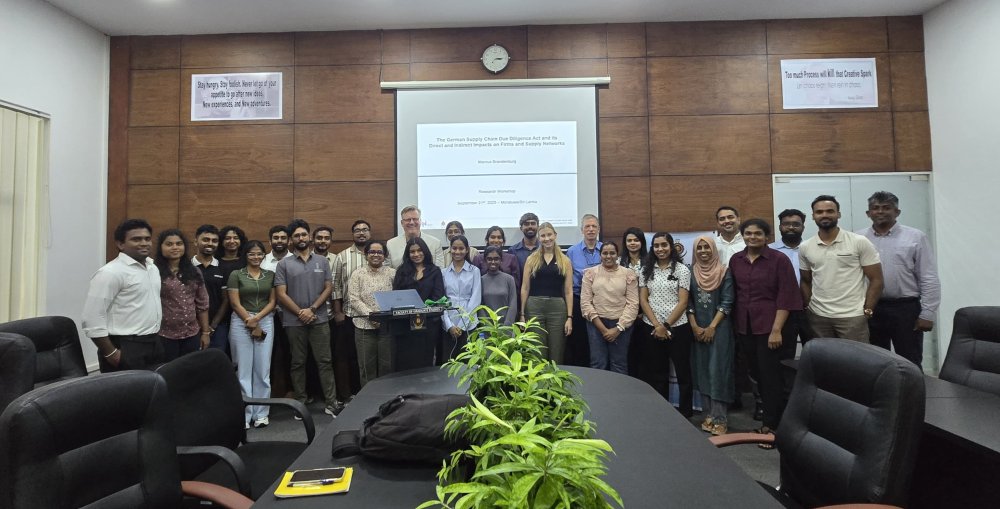
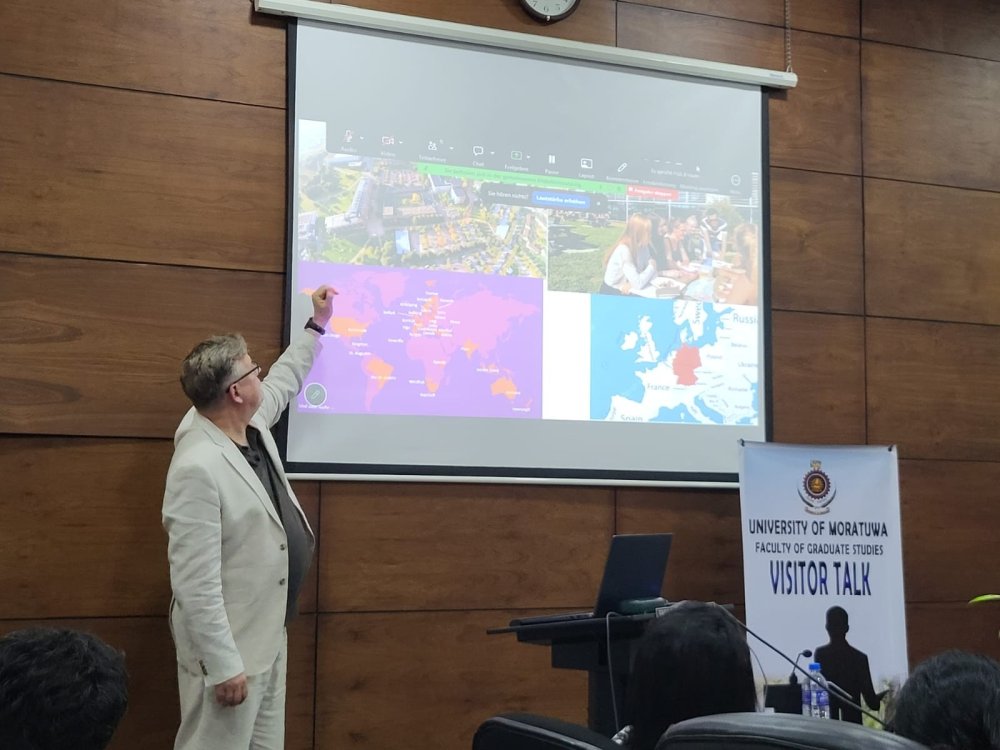
Brandenburg’s research trip to Sri Lanka in September 2026 demonstrated the relevance of these research questions and findings on sustainable supply chains and the circular economy in South Asia. During a guest lecture at the University of Moratuwa, he presented his research findings on Germany’s LkSG. Together with local researchers and students, he discussed the international significance of such legislation for sustainability and its implications for globally operating companies and international supply chains.
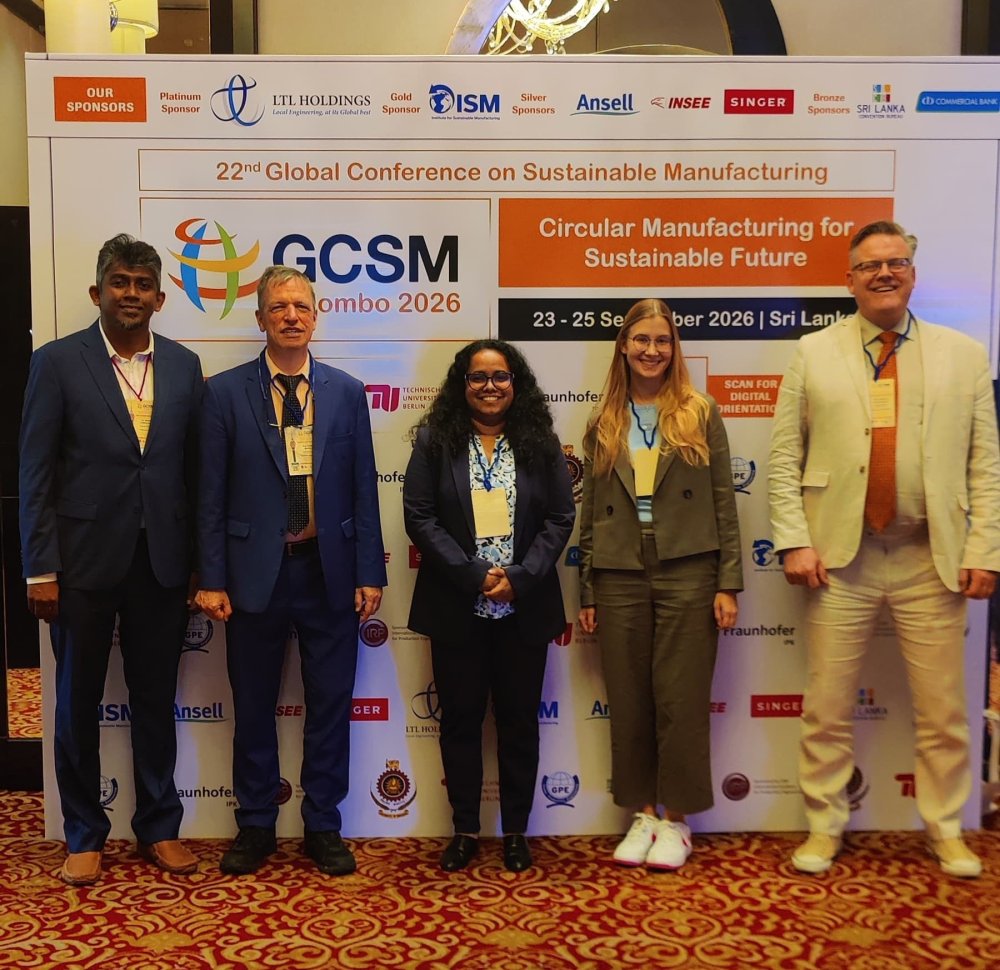
At the subsequent Global Conference for Sustainable Manufacturing (GCSM) in Colombo, Brandenburg presented research findings from HS Flensburg on circular economy practices among SMEs in the German-Danish border region. He discussed the extent to which these findings could be applied in other international contexts with participants from academia and industry.
During a visit to a local tea producer, Brandenburg also gained first-hand insights into how sustainability considerations are addressed in the agricultural sector. While tea cultivation and harvesting remain labor-intensive activities carried out predominantly by hand, industrial production equipment is used for mechanical tea processing. Careful operation and regular maintenance help ensure that this equipment remains in service for a very long time.
The research trip strengthens international knowledge transfer, raises the international profile of Flensburg University of Applied Sciences, and expands its network in a field of business research that is important for sustainability and industrial transformation. Exchanges with international universities and research partners also open up new opportunities for collaborative research, knowledge transfer, and the further development of teaching. Students and doctoral researchers at HS Flensburg can thus contribute to internationally oriented research and knowledge transfer, bringing research findings into the global academic discourse.
But is international travel still necessary in the current age of digitalization and climate change? “As a campus-based university that values face-to-face interaction, we believe that our activities should not be limited to digital formats. Personal contact remains essential,” Brandenburg explains. “Presenting research at conferences in person and engaging directly with fellow researchers are indispensable for putting research findings up for international discussion and gaining new perspectives and ideas for future research. The research trip to Sri Lanka exemplifies HS Flensburg’s commitment to combining applied research with an international perspective and translating research findings generated together with students and doctoral researchers into practical applications.”